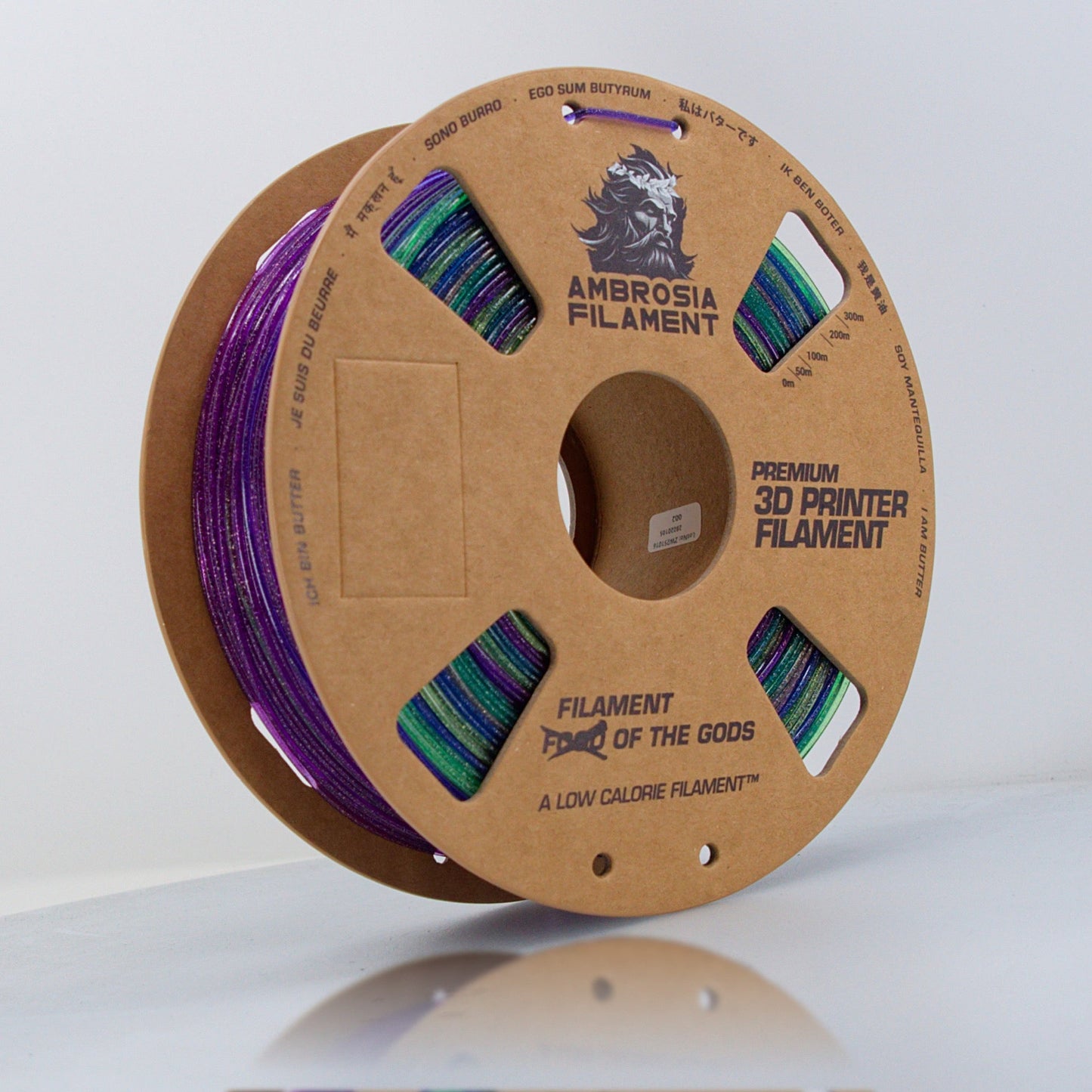
Ambrosia Filament's PLA is part of our "Low Calorie" line—no additives, just butter-smooth printing. Crafted for reliability, it’s the ideal choice for consistent, high-quality results.
Feed your Printer the Filament of the Gods.
Derived from 100% Virgin Grade-A Non-Toxic pellets and manufactured to a tight tolerance of +/- 0.03mm, you will experience consistent extrusion throughout the entire spool. PLA is the preferred material for most hobbyists due to its ease of use, low melting point, and odorless printing characteristics.
Packaging: Arrives in a cardboard box, wound on a cardboard spool, vacuum sealed with desiccant.
Pro Tip: The spool glue is rated for 70°C (158°F). If using a filament dryer above this temperature, we recommend using a printed spool clip or ring to maintain spool integrity.
Filament is hygroscopic. Keep sealed in an airtight container with desiccant when not in use to prevent moisture absorption.
Disclaimer: 3D printing may emit Volatile Organic Compounds (VOCs). Always print in a well-ventilated area. Technical data is provided to the best of our knowledge; users are responsible for determining product suitability for their specific applications.